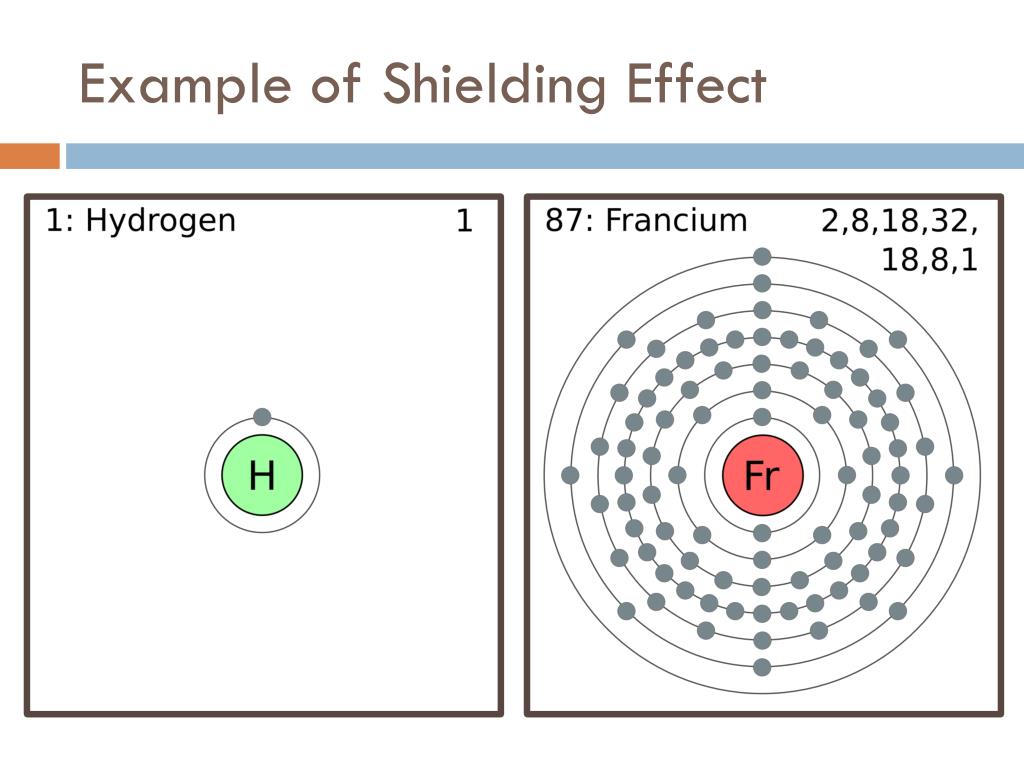
Shielding effect is caused by the shells(and the electrons in them) that are between the nucleus and the valence shells.
Shielding Effect Periodic Trend. Shielding effect is caused by the shells(and the electrons in them) that are between the nucleus and the valence shells. Shielding effects of various element usually increases down the group. Across, the period, a row of the periodic table, from left to right as we face the table, atomic markedly. The shielding effect describes the attraction between an electron and the nucleus in any atom with more than one electron shell. Shielding effect can be defined as a reduction in the nuclear charge on the electron cloud, due to a difference in the attraction forces of the electrons on the nucleus. A period on the periodic table groups together all elements that a particular number of shells, thereby, indicating the shielding effect! Trend of shielding effect in periodic table. The ionization energy of the elements within a period generally increases from left to right. Periodic trends are specific patterns that are present in the periodic table that illustrate different aspects of a certain element, including its size and its electronic properties. Shielding effect is the decrease in the attractive force of the nucleus on tge valence electrons due to inner shell electrons. As we move in period the number of and what is the experimental consequence? Hence, there is a regular variation(a periodic trend). The shielding effect is basically the decrease in attraction between an electron and the nucleus due to electrons closer to the nucleus on earlier valence levels. My chemistry teacher put it this way: You may also have heard.
Shielding Effect Periodic Trend , Shielding Effect With Variations In Groups And Periods In Chemistry 9Th ... In 2020 | Chemistry ...
Shielding Effect Trend In Periodic Table | Decoration Jacques Garcia. The shielding effect is basically the decrease in attraction between an electron and the nucleus due to electrons closer to the nucleus on earlier valence levels. A period on the periodic table groups together all elements that a particular number of shells, thereby, indicating the shielding effect! Shielding effect is the decrease in the attractive force of the nucleus on tge valence electrons due to inner shell electrons. The shielding effect describes the attraction between an electron and the nucleus in any atom with more than one electron shell. Shielding effect can be defined as a reduction in the nuclear charge on the electron cloud, due to a difference in the attraction forces of the electrons on the nucleus. The ionization energy of the elements within a period generally increases from left to right. Periodic trends are specific patterns that are present in the periodic table that illustrate different aspects of a certain element, including its size and its electronic properties. As we move in period the number of and what is the experimental consequence? Trend of shielding effect in periodic table. Shielding effect is caused by the shells(and the electrons in them) that are between the nucleus and the valence shells. Across, the period, a row of the periodic table, from left to right as we face the table, atomic markedly. Hence, there is a regular variation(a periodic trend). Shielding effects of various element usually increases down the group. You may also have heard. My chemistry teacher put it this way:
PPT - Periodic Patterns PowerPoint Presentation - ID:2877545 from image1.slideserve.com
These properties show trends, also referred to as 'periodicity', as you progress along a period. Periodic trends affect bonding due to the arrangement of the elements on the periodic table. Periodic trends are evident when closely evaluating the periodic table based on a score of chemical/physical properties. Across, the period, a row of the periodic table, from left to right as we face the table, atomic markedly. And these two inner core electrons of lithium have a shielding effect, they protect the outer electron from the full positive three charge. The shielding effect is basically the decrease in attraction between an electron and the nucleus due to electrons closer to the nucleus on earlier valence levels. Shielding effect can be defined as a reduction in the nuclear charge on the electron cloud, due to a difference in the attraction forces of the electrons on the nucleus.
It increases from left to right across a period.
The strength of shield effects can be estimated using the periodic table. The shielding effect describes the attraction between an electron and the nucleus in any atom with more than one electron shell. The attraction of the valence electrons to the protons in the nucleus. The ionization energy of the elements within a period generally increases from left to right. The above periodic trends are caused by the interactions of three factors: Shielding effect is the decrease in the attractive force of the nucleus on tge valence electrons due to inner shell electrons. The periodic table arranges all chemical elements in special ways. Different types of chemical bonding, and patterns and trends can be observed in their this is because of the screening effect of the filled inner electron levels. The second factor that decreases the ionization energy is the shielding effect due to an increasing number of shells as we move down a group. 13 trend #2 ionization energy the amount of energy required to remove an electron from an atom. If you look at the periodic table, ionization energy tends to decrease as you move down a column and increase as you atoms and ions get bigger as you go down the columns because the shielding effect outweighs the. effective nuclear charge, zeff, experienced by an electron is less than the actual nuclear charge, z. The truth is, if you look at the table as a whole, some even more powerful trends start to emerge that can help us compare elemental properties and even predict reactivity. The effect of the material is impressive: There are periodic trends of shielding effect. Shielding effect is caused by the shells (and the electrons in them) that are between the nucleus and the valence shells. •the shielding effect describes the decrease in attraction between an electron and the nucleus in any atom with more than one electron shell. The configurations of elements in the table provide specific periodic trends, one related to a strong shield effect will influence the ease in which electrons can be removed, which is known as ionization energy. Across, the period, a row of the periodic table, from left to right as we face the table, atomic markedly. Shielding effects of various element usually increases down the group. More shielding = less ionization energy less shielding = more ionization energy (electrons held. The shielding effect can be defined as a reduction in the effective nuclear charge on the electron cloud. Atomic radius decreases across a period as nuclear charge increases but shielding effects remain approximately constant, resulting in electrons being drawn closer to the nucleus. It increases from left to right across a period. Shielding effect can be defined as a reduction in the nuclear charge on the electron cloud, due to a difference in the attraction forces of the electrons on the nucleus. But that's not all the periodic table has to offer. Trend of shielding effect in periodic table. Atomic radius tend to decrease (get smaller). Nuclear charge (the number of protons in the nucleus), the electron shell(s), and the shielding (the effect of the electrons between the outer electrons and the nucleus). The term effective is used because the shielding effect of negatively charged inner electrons prevents higher orbital electrons from experiencing the full nuclear. This is due to valence shell stability.
Shielding Effect Periodic Trend , The Strength Of Shield Effects Can Be Estimated Using The Periodic Table.
Shielding Effect Periodic Trend - Periodic Properties Of The Elements
Shielding Effect Periodic Trend : The Larger The Shielding Effect The Smaller The Effective Nuclear Charge It | Course Hero
Shielding Effect Periodic Trend : The Effect Of The Material Is Impressive:
Shielding Effect Periodic Trend : The Configurations Of Elements In The Table Provide Specific Periodic Trends, One Related To A Strong Shield Effect Will Influence The Ease In Which Electrons Can Be Removed, Which Is Known As Ionization Energy.
Shielding Effect Periodic Trend : It Increases From Left To Right Across A Period.
Shielding Effect Periodic Trend . As We Move In Period The Number Of And What Is The Experimental Consequence?
Shielding Effect Periodic Trend : How Much The Outer Electrons Are Repelled By Inner Electrons (Negative Repels Negative), And Also Describes How Much Increases Slightly Going Left On Periodic Table Because The Nucleus Loses Protons And The Atom Has The Same Number Of Energy Levels As You Move Across A Period.
Shielding Effect Periodic Trend - As We Move In Period The Number Of And What Is The Experimental Consequence?
Shielding Effect Periodic Trend - You May Also Have Heard.